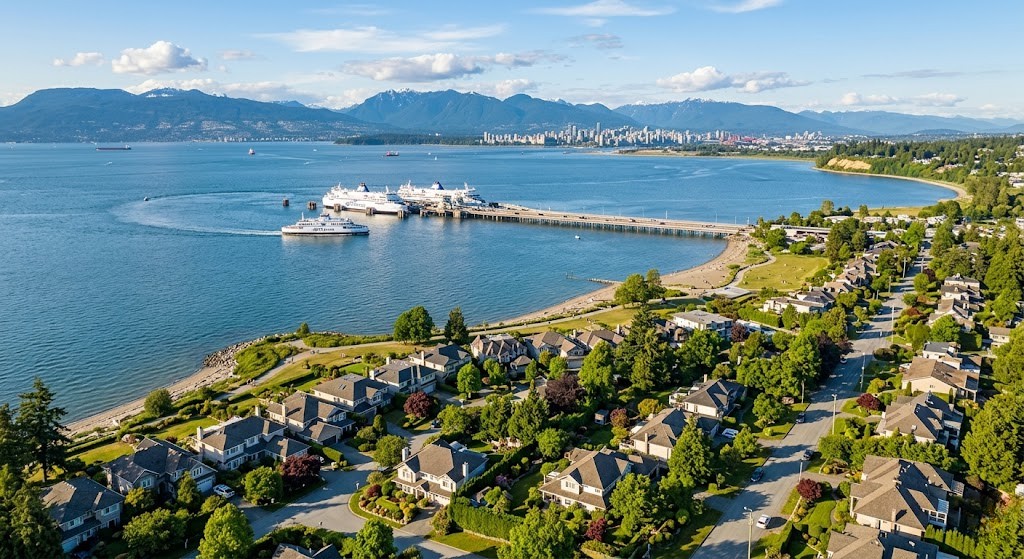
Tsawwassen Real Estate Strategic Guide
Tsawwassen is one of the most unique, geographically defined real estate markets in Greater Vancouver. While it is often grouped together with neighboring South Delta or Ladner, the reality is that Tsawwassen behaves very differently both in how homes are valued and in how buyers make decisions.
Ownership in Tsawwassen tends to be exceptionally long-term. Many homes have been held for decades, often by the same families, which means sellers are not reacting to short-term market noise or jumping at temporary cycles. Decisions here are usually thoughtful, deliberate, and tied to larger life transitions such as downsizing, estate planning, or moving closer to family rather than speculative trading.
From a pricing and strategy perspective, Tsawwassen is not a one-size-fits-all market. Two homes with similar square footage can perform very differently depending on ocean views, proximity to the town centre, lot topography, and whether the property sits on leasehold vs. freehold land. Approaches that work in Vancouver, Burnaby, or even neighboring North Delta do not translate cleanly here.
This guide is written for Tsawwassen homeowners who want a clear and realistic understanding of how the market actually works. It is designed to explain what buyers focus on today, how value is assessed, and why a hyper-local strategy plays a critical role when it comes time to sell.
Tsawwassen at a Glance
Tsawwassen sits on a peninsula in the southwestern corner of the Lower Mainland, bounded by Boundary Bay to the east and the Strait of Georgia to the south and west. Its unique geography, including its proximity to the US border and the BC Ferries terminal, plays a massive role in how neighborhoods are shaped and how the housing market behaves. Unlike sprawling urban centers, Tsawwassen is bounded by water and agricultural land, creating a finite footprint that naturally drives long-term value.
Tsawwassen functions as a distinct, self-contained seaside community rather than just a bedroom suburb. It features its own beach-access points, a modernized town centre, master-planned developments, and a mix of residential environments ranging from prestigious hillside estates to resort-style master communities near the boardwalk. This diversity means buyer demand is spread across multiple property types and entirely separate land-tenure types.
Homeownership here is notably stable. Many residents choose Tsawwassen for its slower pace of life, high safety ratings, and distinct microclimate (boasting more sunshine than the rest of Metro Vancouver). This creates strong neighborhood continuity and limited annual turnover. As a result, inventory often enters the market in waves tied to specific life events, like downsizers transitioning out of large family homes, rather than short-term investment speculation.
The community’s lifestyle appeal and growing amenities also heavily influence buyer behavior. Tsawwassen attracts young families fleeing denser urban cores, affluent downsizers, and local move-up buyers who refuse to leave the peninsula. These dynamics contribute to a market that rewards thorough property preparation, realistic pricing, and a clear understanding of who the target buyer is for any given home.
The Tsawwassen Housing Landscape
Tsawwassen offers a highly segmented housing mix, and understanding where a property fits within that landscape is essential when assessing value and planning a sale. Buyer expectations, pricing sensitivity, and absorption rates vary significantly depending on property type, land status, age, and proximity to the water.
Detached Homes in Tsawwassen
Detached homes make up the foundational core of Tsawwassen's real estate stock and draw the broadest range of high-equity buyers. A large portion of these homes consists of spacious split-levels and ranches built between the 1960s and 1990s. The detached market is distinctly bifurcated: buyers are either looking for a fully updated, move-in-ready oasis or they are evaluating older properties primarily for their lot value and long-term holding potential.
Lot characteristics play an outsized role in value here. Topography (such as the slopes of Pebble Hill or English Bluff), views of Boundary Bay, exposure, and lot usability influence buyer interest just as much as interior square footage. Buyers have become increasingly cautious about taking on major renovation projects due to elevated construction costs, meaning original-condition homes face steeper value adjustments compared to seamlessly renovated properties.
Townhomes and Strata Properties
Townhomes in Tsawwassen are highly coveted, acting as the primary vehicle for local downsizers who want to transition out of single-family homes without leaving the community. Because these properties are governed by strata, value is tied explicitly to the structural and financial health of the complex.
Buyers scrutinize building age, roof and building envelope conditions, contingency reserve funds, and historical strata minutes. Strata fees and restriction bylaws (such as age or pet restrictions) can meaningfully restrict or expand the buyer pool. Well-managed, low-maintenance complexes in walkable locations near the town centre consistently hold their value, while older strata properties with looming capital projects face longer days on market.
Condominiums and Leasehold vs. Freehold
The condominium market in Tsawwassen is heavily divided by location and land tenure. Traditional freehold low-rise buildings in the town centre behave entirely differently from newer master-planned concrete and wood-frame developments located on leased Tsawwassen First Nation (TFN) land.
Important Strategic Note: Freehold properties traditionally command a premium and attract highly traditional, equity-rich buyers. Leasehold properties offer a more accessible price point and attract lifestyle-oriented buyers or investors, but they require a highly specialized marketing approach to ensure buyers understand the remaining lease structure and financing requirements.
How the Tsawwassen Market Behaves
Tsawwassen does not operate as a single, uniform market. Instead, it is a collection of distinct micro-markets that move at different speeds based on price brackets and asset classes. Understanding these patterns is critical for homeowners, as relying on aggregate Metro Vancouver headlines often leads to costly missteps.
Measured Buyer Behavior: Buyer demand in Tsawwassen is deliberate. While move-in-ready homes priced correctly for the current climate attract swift interest, properties that launch with over-ambitious pricing quickly stagnate. Tsawwassen buyers are highly patient; they are comfortable waiting out listings and comparing options across the peninsula.
The Under-$1.5 Million Sweet Spot: Market velocity varies dramatically by price point. Detached homes and townhomes priced below $1.5 million experience steady, active absorption. Conversely, luxury homes and expansive view properties priced above $2.0 million move at a much slower pace, requiring extended patience and targeted marketing.
The Renovation Gap: The gap between pristine, renovated properties and original-condition homes has widened significantly. Because buyers factor in the time, stress, and carrying costs of modernizing a home, original properties are evaluated through a strictly value-driven lens.
Highly Comparative Pools: Buyers on the peninsula are deeply educated on local inventory. They know the difference in lifestyle between living "on the cliff" versus living in the flatlands of Central Tsawwassen. Pricing decisions must align cleanly with recent local comparables, as buyers rarely let emotion overrule market data.
Pricing and Strategy in Tsawwassen
Tsawwassen rewards market precision. Pricing a home here is less about aiming high to "test the waters" and more about aligning with how buyers perceive value from the exact day the property hits the MLS.
One of the most common challenges Tsawwassen sellers face is overestimating how much a buyer will overlook dated interiors or awkward layouts in favor of a prestigious neighborhood name. In the current economic climate, buyers calculate the cost of updates down to the dollar. A home that looks flawless on paper can sit on the market if its list price does not respect the required capital updates.
Effective strategy starts with segmenting the specific buyer profile for your property type:
Property Segment Target Buyer Profile Primary Valuation Drivers View / Luxury Estates Affluent executives, global wealth Ocean views, architectural exclusivity, privacy Central / Pebble Hill Detached Move-up young families School catchments, lot usability, renovation condition Town Centre Strata Local downsizers, retirees Walkability, contingency reserve funds, age restrictions TFN Leasehold Communities First-time buyers, downsizers Price-per-square-foot, amenity access, remaining lease terms Strategy extends well beyond the list price.
Because Tsawwassen is a tight-knit community where real estate moves by word of mouth as much as public portals, listings that linger face heavy negotiation pressure. A data-informed, realistic launch price consistently yields a cleaner sale, better terms, and a faster timeline than a speculative price that requires consecutive public reductions.
Seller Profiles That Dominate Tsawwassen
The Tsawwassen market is driven by generational transitions rather than rapid investor turnover. Identifying which profile your property represents helps customize the preparation and marketing timeline.
Long-Time Owners and Estate Transitions
A massive share of Tsawwassen's single-family inventory comes from residents who have called the peninsula home for 30 to 50 years. These properties carry incredible sentimental value but are often fundamentally original in styling. Success for these sellers relies on factual positioning, removing emotional bias from the land-value conversation, and focusing marketing efforts on the property's structural integrity or lot potential.
The Local Downsizer
Downsizers are a dominant force in Tsawwassen. They want to sell the large family home on Pebble Hill or English Bluff and move into a single-level condo or townhome near 56th Street. For this profile, certainty, flexible closing timelines, and a seamless transition override the desire to squeeze every last speculative dollar out of the market.
Move-Up Young Families
These are typically couples moving from Vancouver or Richmond townhomes into a detached Tsawwassen home to gain a backyard and proximity to top-tier schools like South Delta Secondary or private options. Sellers targeting this demographic must highlight functional layout features, neighborhood safety, and turn-key convenience.
Tsawwassen Sub-Areas and Neighborhood Depth
Tsawwassen cannot be evaluated as a single entity; it is divided into highly specific neighborhoods, each carrying its own micro-trends, average price points, and buyer expectations:
English Bluff: Known for luxury real estate, commanding waterfront estates, and sweeping sunset views over the strait. Property values here fluctuate wildly based on bluff stability, view unobstructedness, and architectural caliber.
Pebble Hill: A highly desirable, elevated family neighborhood characterized by large lots, quiet cul-de-sacs, and mature landscaping. It offers a classic suburban feel with solid holding value.
Tsawwassen Central: The walkable flatlands surrounding the urban core. It features a mix of older ranches, modern custom-built homes, and mature townhome complexes. Its flat topography makes it incredibly popular with seniors and young families alike.
Cliff Drive: Bordering the hillside, this area mixes mid-century character homes with modern builds, valued for its quick access to the town centre and local parks.
Boundary Beach / Tsawwassen East: A relaxed, beach-community vibe along the shallow waters of Boundary Bay. Properties here attract buyers focused explicitly on lifestyle, sunshine, and coastal living.
Tsawwassen First Nation (TFN) Lands: The northern master-planned sector featuring modern shopping hubs, townhomes, and single-family subdivisions on long-term leasehold land, operating on an entirely different pricing structure than freehold Tsawwassen.
Current Listings and Market Monitoring
For homeowners actively tracking the local market, active inventory provides indispensable context. Watching current listings reveals exactly how your direct competition is positioning themselves, where price pockets are forming, and how buyers are reacting in real-time.
However, active listings should be viewed purely as strategic references rather than final indicators of value. Asking prices reflect a seller’s aspirations and entry strategy; final sold data dictates the true ceiling of the market. Monitoring how long specific listings sit and analyzing the final gap between list price and sold price is where the real market insight lies.
A Thoughtful Next Step for Tsawwassen Homeowners
If you own a property in Tsawwassen and are beginning to think about your next chapter, whether that transition is six months away or five years down the road, gaining a clear, unvarnished look at your true position in the current market is an invaluable asset.
A brief, data-focused conversation can help clarify your home's equity, iron out the nuances of your neighborhood's current micro-market, and outline what steps you can take now to protect your asset's value. Armed with hyper-local insight, you can make your next move with absolute confidence rather than relying on mainland assumptions.

This representation is based in whole or in part on data generated by the Chilliwack & District Real Estate Board, Fraser Valley Real Estate Board or Greater Vancouver REALTORS® which assumes no responsibility for its accuracy. © Copyright 2026 by the Greater Vancouver REALTORS®, Fraser Valley Real Estate Board, Chilliwack and District Real Estate Board, and BC Northern Real Estate Board. All Rights Reserved. | © 2026 REMAX Michael Cowling and Associates Realty. All Rights Reserved.
Facebook
Instagram
LinkedIn
Youtube
X
TikTok